

Questions about:

Computed Tomography (CT)
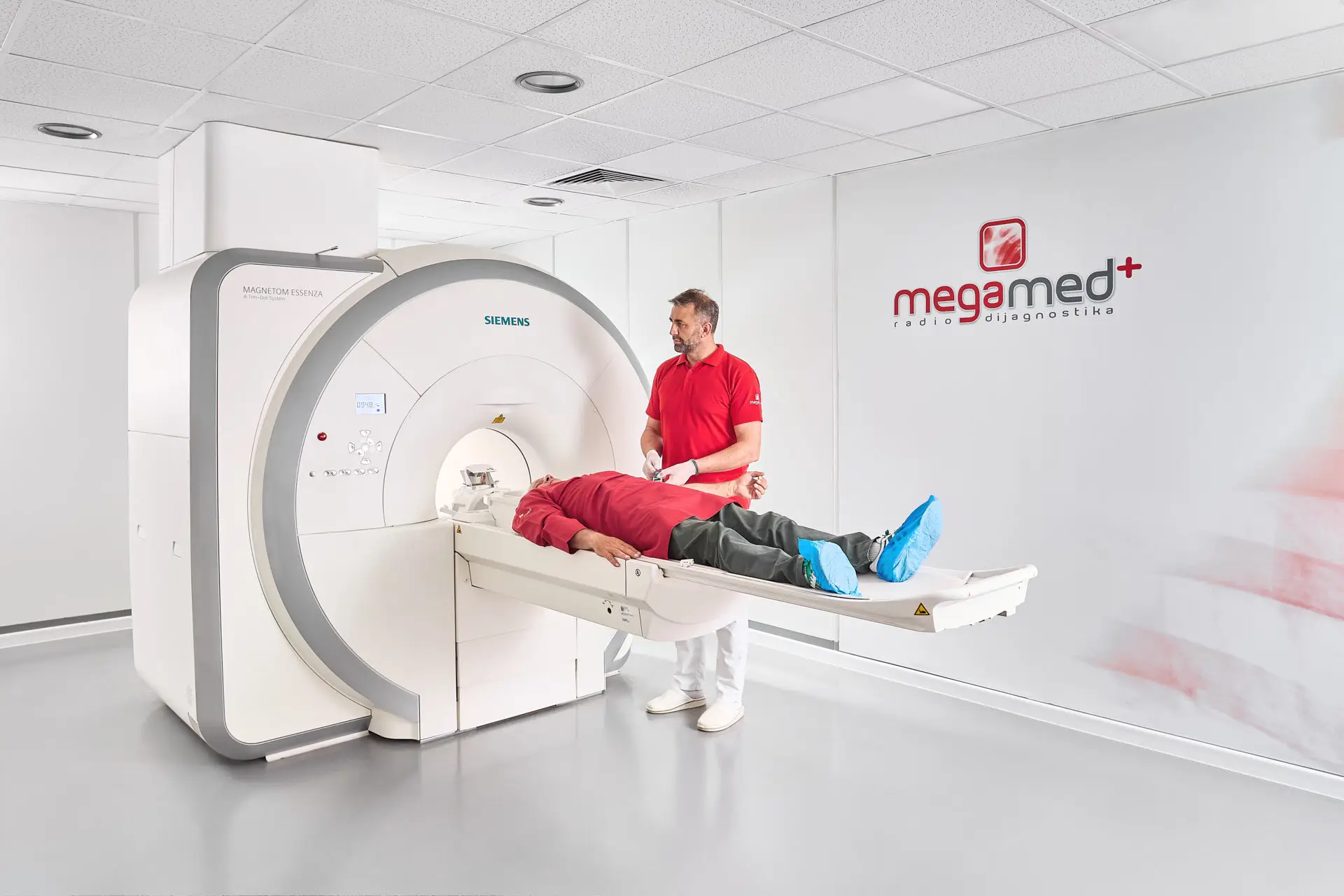
Magnetic Resonance Imaging (MRI)
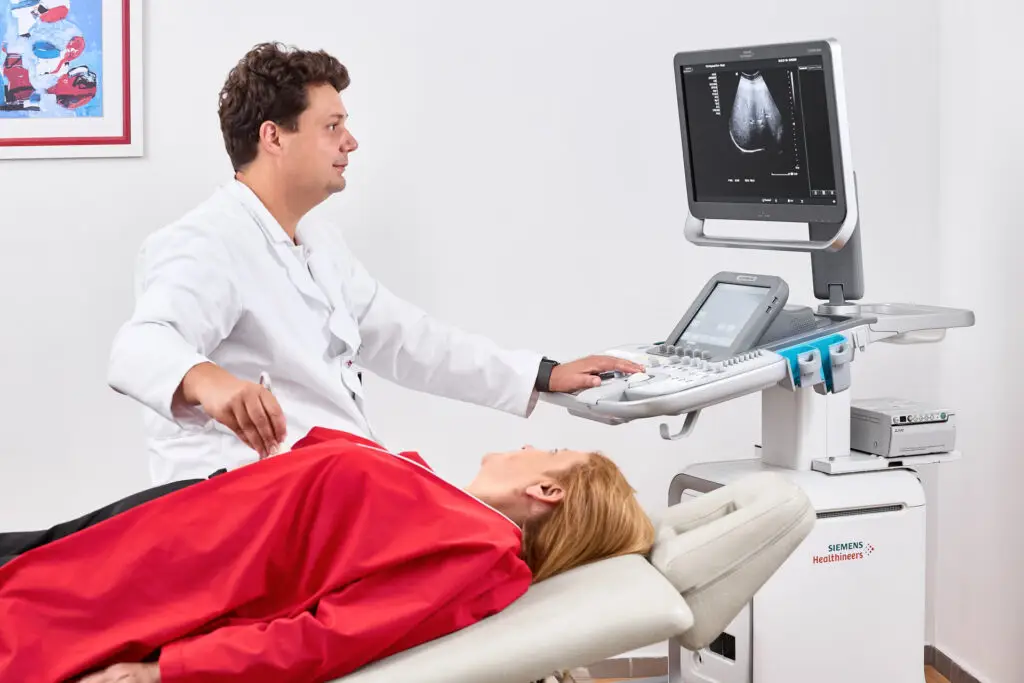
Diagnostic Ultrasound Imaging
Computed Tomography (CT)
Our modern scanner enables detailed examinations with radiation doses within the reference levels recommended by relevant international organisations and associations.
The scan itself is very brief and takes between 15 and 90 seconds, depending on the area being examined. The entire procedure, including preparation, takes a little longer.
CT scanning is recommended in acute conditions such as strokes and bleeding, chest, abdominal and pelvic pain, inflammatory conditions (such as lung and appendiceal inflammation), detection and monitoring of tumours throughout the body, injuries and fractures of the skeleton, and assessment of blood vessels. CT is also an imaging option for patients with pacemakers.
CT scanning is quicker and generally well tolerated by patients. It provides detailed images of bone tissue and calcifications in the body, as well as cross-sectional images of the entire body with slice thicknesses of up to 1 mm, including images of blood vessels.
If contrast agent administration is required for the examination, you should not eat for 2–3 hours before the scan. Drinking fluids is permitted.
No. The only discomfort may be the intravenous administration of a contrast agent, when required.
Before the examination begins, please inform us if you have a known allergy to iodine-based contrast agents or have experienced previous reactions to contrast.

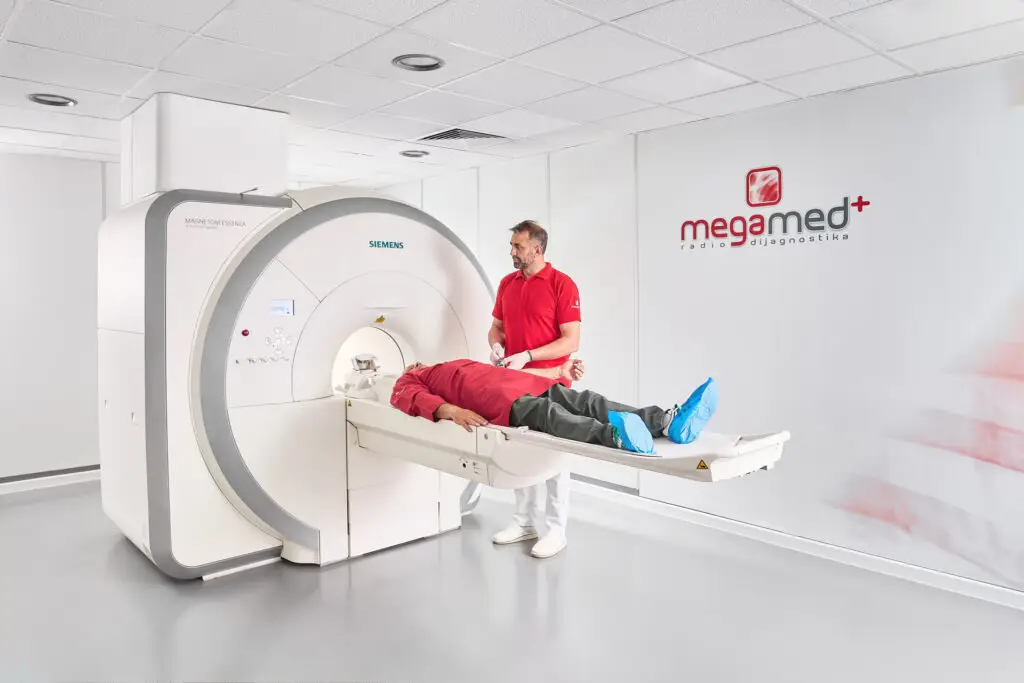
Magnetic Resonance Imaging (MRI)
MRI uses a magnetic field and radio waves, which do not have harmful effects on human health.
Depending on the type of examination, the scan may take between 20 and 45 minutes.
MRI is recommended for assessing the condition of soft tissues and joints (hand, elbow, shoulder, knee and hip), as well as the abdomen and pelvis, brain, spine and spinal cord.
MRI provides better differentiation between soft tissues and is not harmful to human health, allowing examinations to be repeated frequently, particularly in younger patients.
MRI is painless, but it can be noisy. The only discomfort may be the intravenous administration of a contrast agent, when required.
In exceptional circumstances, and subject to specific procedures being followed, a companion may be permitted to remain during an MRI examination.
The noise is a normal result of the operation of the gradient coils within the magnet. We provide patients with protective headphones to reduce the noise and ensure maximum comfort.
All metal objects must be removed, including jewellery, watches, glasses, dentures, mobile phones and credit cards, as the strong magnetic field may damage them or cause artefacts in the images.
You will remain under continuous audio-visual monitoring by our staff. You will hold a safety call button in your hand, which you can press at any time to stop the procedure and request assistance.
- Patients with implanted pacemakers (devices that regulate the heartbeat)
- patients who, for any other reason, must not be exposed to a magnetic field.
Because MRI does not use radiation, the examination can be repeated as often as necessary to monitor your health or assess the effectiveness of treatment.
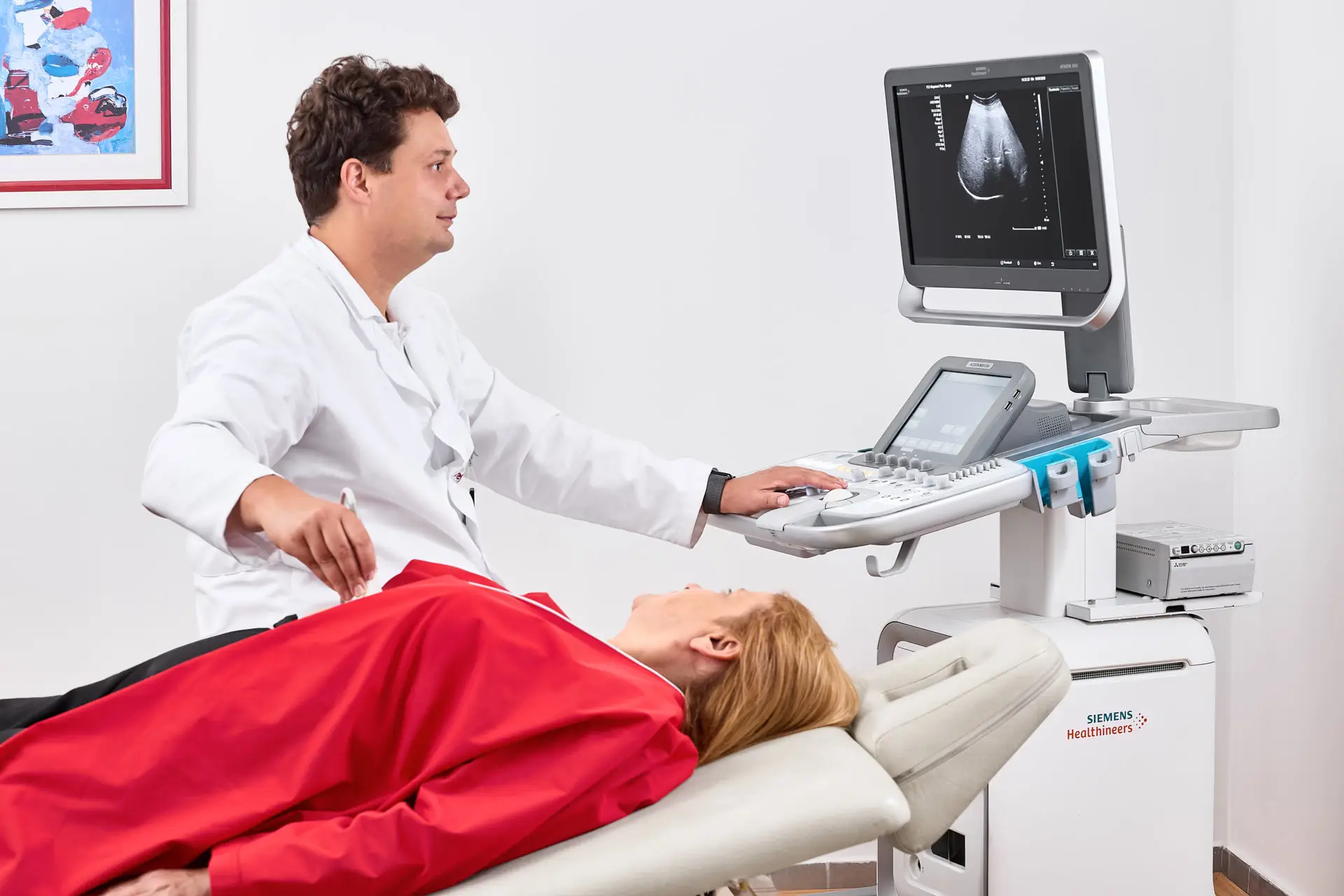
Diagnostic Ultrasound Imaging
Ultrasound examinations are completely safe and non-invasive. They use high-frequency sound waves and do not use any radiation, making them suitable for all age groups, including pregnant women and children.
- Preparation depends on the area being examined:
- Abdomen: A light meal or fasting for 6 hours before the examination is recommended to reduce gas that could interfere with image quality.
- Pelvis (urological examination): You should arrive with a full bladder.
- Other examinations: No special preparation is required.
An ultrasound examination typically takes between 15 and 30 minutes, depending on the complexity of the area being examined.
The examination is completely painless. You may feel pressure from the transducer and the coolness of the gel applied to your skin to improve the transmission of sound waves.
Because ultrasound does not use radiation, examinations can be repeated as often as necessary to monitor your health or assess the effectiveness of treatment.